Russia’s long‑range missile and drone strikes on Ukraine
Which munitions are being used against cities and energy infrastructure, despite diplomatic overtures between Ukraine and Russia?

Despite diplomatic overtures between Ukraine and Russia, this winter has seen continued long-range missile and drone strikes on Ukrainian cities, targeting critical energy infrastructure that supplies heating and water to civilians, as well as residential areas in what appear to be indiscriminate attacks causing civilian casualties. Russian forces have intensified these large-scale operations since late 2024, significantly affecting Ukraine’s power generation capacity and triggering widespread blackouts that leave populations without electricity, heating, or water for extended periods. The map below displays all air strike, missile, and drone events in Ukraine recorded in METIS from November 2025 to February 2026.
In response to Russian long-range attacks, Ukraine fields a wide range of air defence systems, from anti-aircraft guns to highly complex surface-to-air missile systems. Many of the latter have been supplied by foreign nations, along with the interceptor missiles. These are high cost and low volume items leaving Ukraine dangerously low on missiles to engage incoming targets if used in large quantities.
Intense Russian drone strikes
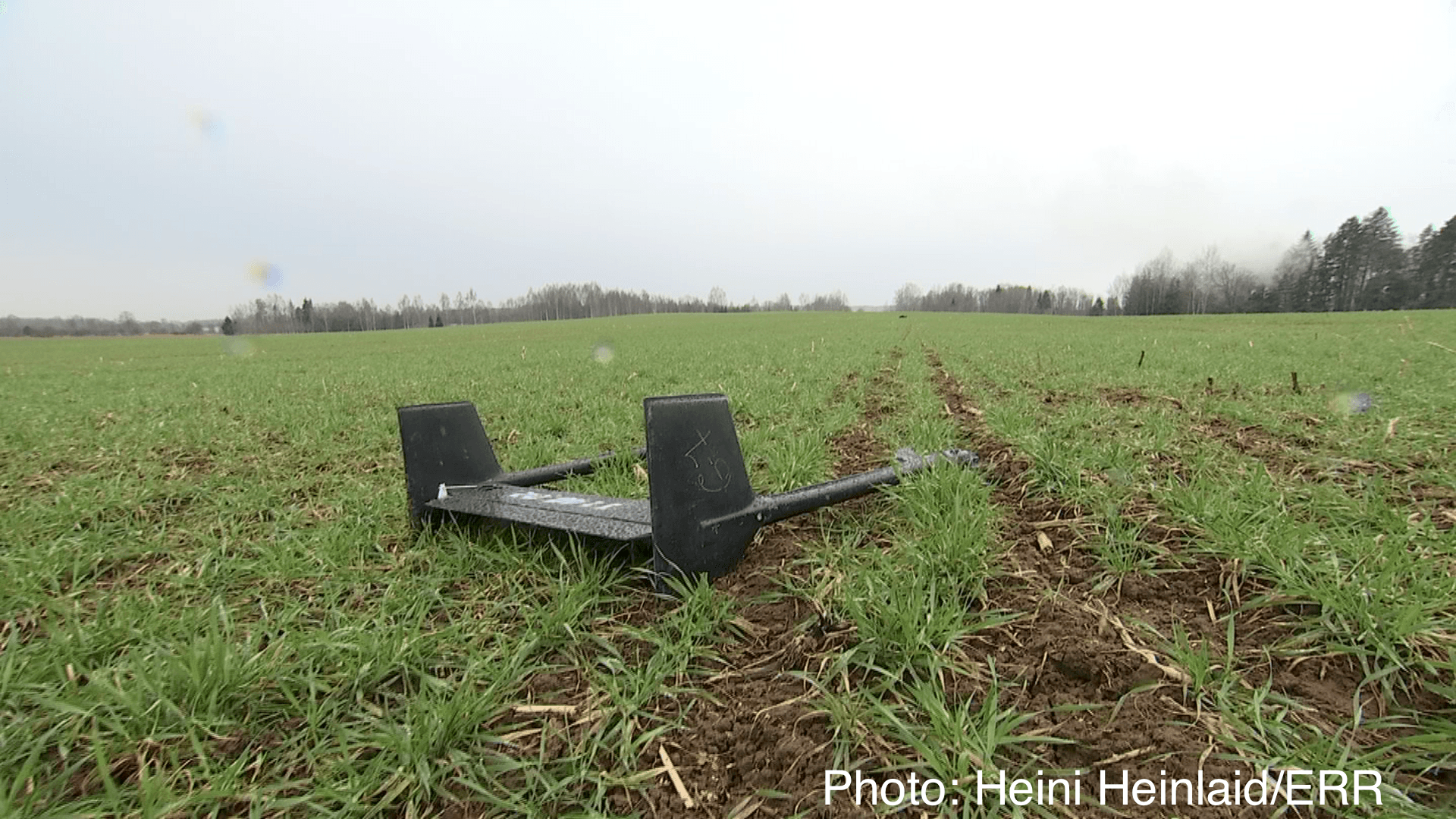
Long-range Russian attack drones continue to target Kyiv and other Ukrainian cities on a regular basis. Typically the drones are of the Geran series, also known as Shaheds from the Iranian design provided to Russia. The Geran-2, derived from the Shahed-136, is the most frequently used, with large numbers launched against Ukraine. It can be fitted with various warheads, including a range of high-explosive, thermobaric and incendiary types, as well as carry additional payloads like the Small Fragmentation Munition. Later models such as the Geran-3, and new Geran-4 and Geran-5 are also present. Smaller Russian attack drones like the BM-35 have also targeted Kyiv.
![]() | ![]() | ![]() |
|---|---|---|
GERAN-2 | GERAN-2 SFM | GERAN-3 |
One-way attack drone | Drone-delivered bomb | One-way attack drone |
Event captured by Fenix Insight on 05 February 2026: "Dnipropetrovsk region: during another air attack on the city, an enemy drone fell on the ice and did not detonate." | Event captured by Fenix Insight on 29 November 2025: "A least three Russian “Geran-2” (Shahed) strike UAVs that attacked Vyshhorod yesterday dropped fragmentation submunitions in the city streets." | Event captured by Fenix Insight on 22 January 2026: "Over the last few hours, Russian Geran-3 jet-drones have been attacking the "Kyiv" 750 kV electrical substation near Nalyvaikivka, Kyiv Oblast." |
Russia has deployed drones equipped with Starlink connectivity, effectively rendering them resistant to electronic warfare jamming. The Geran-2 (and likely other Geran series), BM-35 and Molniya-2 are all known to have Starlink incorporated for guidance, as seen in the imagery below. However, Starlink has since implemented new measures to prevent its technology from being used in attack drones.
![]() | ![]() |
|---|---|
BM-35 | MOLNIYA-2 |
One-way attack drone | One-way attack drone |
Event recorded by Fenix Insight on 5 January 2026: "Russian BM-35 strike drone impacts power lines in the Ukrainian city of Dnipro." | Event recorded by Fenix Insight on 02 February 2026: "Video footage shows police bomb disposal experts at the site where an enemy Molniya-2 UAV struck an energy infrastructure facility" |
While many drones are intercepted mid-flight, they place a significant strain on Ukraine’s air defences. Drones are often employed in saturation attacks, designed to overwhelm local defences and increase the likelihood that accompanying cruise and ballistic missiles will reach their targets.
Russian cruise and ballistic missiles used in long-range strikes against Ukraine
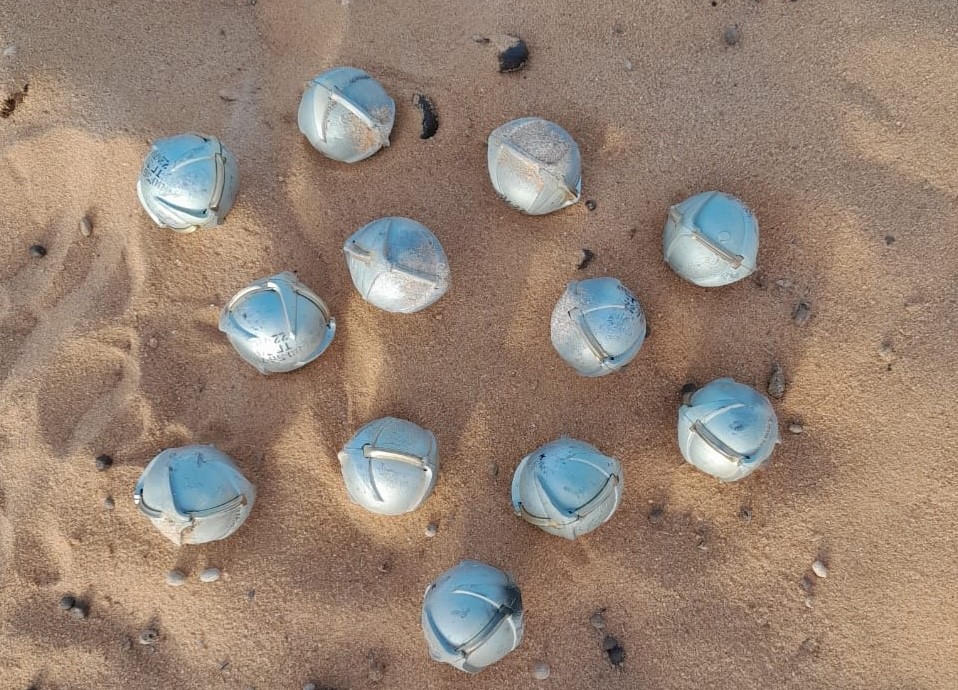
These long-range missiles have been continuously used to strike military and civilian targets since the start of the war. The air-launched Kh-101 remains the most common cruise missile deployed, though several variants and developments have emerged during the course of the war. The Kh-101 can have different configurations, including: single or dual high-explosive fragmentation warheads; a submunition dispensing warhead; incendiary elements; and flare dispensers for countering air defences. The larger Kh‑22 has also reportedly been used in recent strikes against a power station—its first recorded deployment in several months.
![]() | ![]() | ![]() |
|---|---|---|
Kh-101 | Kh-101 SM | Kh-22 |
Cruise missile | Submunition | Cruise missile |
Event captured by Fenix Insight on 07 February 2026: "Footage showing a Russian Kh-101 cruise missile releasing flares as it flies over Rivne City to strike the "Rivne" 330 kV substation" | Event captured by Fenix Insight on 29 November 2025: "Journalists claim that after the shelling in Kyiv, they found fragments of a cluster munition at the site of the attack" | Event captured by Fenix Insight on 03 February 2026: "The following was targeted: "Kyiv" 750 kV electrical substation by ~15 Kh-32s and 2 Zircons." |
The Iskander series launched ballistic missiles, the 9M723 and 9M723-1, are also commonly used, along with the air-launched Kh-47 Kinzhal equivalent. These munitions are more challenging for air defences to engage, as only limited systems have a ballistic missile defence capability, and even then there are challenges. Their high speed and trajectory of flight make them difficult to track and engage, a problem compounded by the use of penetration aids and the saturation of target areas with large numbers of missiles and drones.
![]() | ![]() | ![]() |
|---|---|---|
9M723 | 9B899 | Kh-47 |
Ballistic missile | Penetration aid | Ballistic missile |
Event captured by Fenix Insight on 24 January 2026: "There was a big shock for one Kyiv resident, and a lucky escape too by the look of it. The remains of a missile ended up in his garden" | Event captured by Fenix Insight on 18 June 2022: "Russian troops shelled Kharkiv on 18 June. Following the shelling, 9B899 devices from a Russian missile were found in the city." | Event captured by Fenix Insight on 29 December 2026: "Russian Kinzhal missile struck a private residential house in Chernigiv region. Explosive ordnance disposal specialists neutralized the warhead." |
Conclusion
During the harsh winter, marked by repeated cold snaps, with temperatures dropping as low as −20°C, Russian air strikes on Ukrainian energy infrastructure appear intended to inflict hardship on the civilian population and pressure the Ukrainian government. Sustained, large‑scale strikes on power plants and substations have led to inconsistent electricity, heating, and water supplies across Ukraine. Yet Ukrainian resilience remains notable, as essential services are often restored quickly despite severe weather and ongoing bombardment.
Ukrainian air defences continue to struggle under the sheer volume of long‑range drone and missile attacks, with interceptor missile stocks running low. At the same time, it is uncertain whether Russia can maintain this operational tempo indefinitely. Cruise and ballistic missiles are costly, complex, and time‑consuming to produce, whereas drones are comparatively cheap and easy to manufacture - enabling Russia to launch them in large quantities. However, their overall effectiveness is limited, as many drones are intercepted before reaching their targets.
As the war nears the end of its fourth year, there is significant uncertainty over a peace agreement. With ceasefire talks stalled, Russian drone and missile attacks against Kyiv and other cities are expected to continue. The intensity is likely to be maintained during winter, to apply the maximum pressure to the Ukrainian population, and additionally during any further ceasefire talks, as Russia will attempt to improve its position. Ultimately, the long‑term sustainability of Russia’s strike campaign, and Ukraine’s capacity to maintain an effective air defence, both remain in question.
Fenix Insight welcome your use of our data, visualisations, analysis, and other information, but always with proper attribution and a link back to our website. Please read our Attribution Policy for further information.