
Operation Epic Fury: Tracking munition use and escalation across the region
Operation Epic Fury: Tracking munition use and escalation across the region
On the morning of 28th February 2026, the United States of America and Israel, as part of operation Epic Fury, launched a high‑intensity air campaign against Iran. Since then, it has escalated into a regional conflict, with Iranian missile and drone attacks hitting US bases, Israel, and several neighbouring states. This situation report highlights key incidents and provides an overview of the munitions used by both sides.


On the morning of 28th February 2026, the United States of America and Israel, as part of operation Epic Fury, launched a high‑intensity air campaign against Iran, starting with coordinated strikes targeting senior leadership, munitions factories and military facilities. Since then, it has escalated into a regional conflict drawing in Lebanese, Iraqi, and Gulf-based actors, with Iranian missile and drone attacks hitting US bases, Israel, and several neighbouring states. This situation report highlights key incidents and provides an overview of the munitions used by both sides.
At Fenix Insight we have been tracking the conflict since its start, identifying where and when attacks are happening, as well as the munitions used. Please reach out to us if you require any further information or analysis.
U.S. and Israeli strikes on Iran
While U.S. and Israeli strikes have primarily targeted Iranian airbases, police and security branches, IRGC facilities, and nuclear facilities, a wider range of sites have also been hit. These include a state broadcasting office, ports, airports, an IRGC-linked university, a sports complex, and several oil refineries.
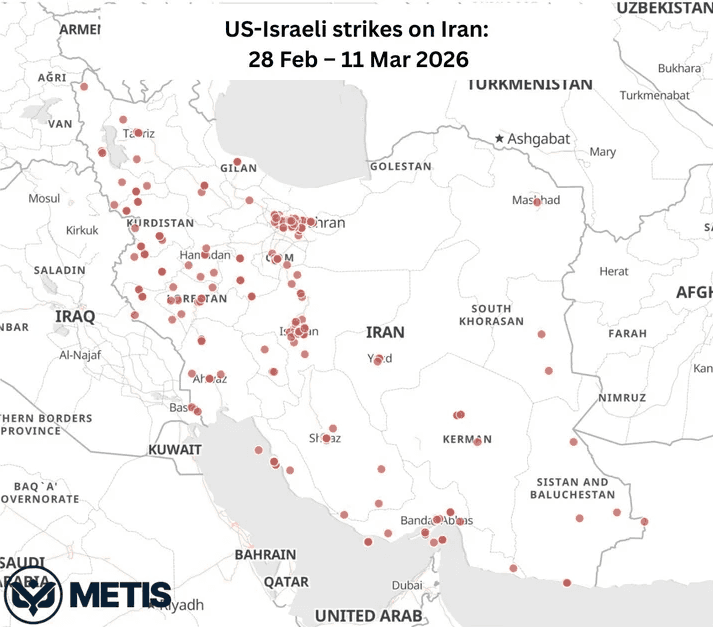
The US-Israeli campaign against Iran’s nuclear infrastructure focuses on access denial and capability disruption. Early strikes reportedly damaged access points to the underground enrichment complex at Natanz, aiming to slow repairs, block the movement of sensitive equipment, and maintain pressure on key nuclear facilities. The IAEA reported visible but peripheral damage near Isfahan, followed by later claims of more serious damage without contamination.
Israel struck Minzadehei, which it claims is an underground nuclear research facility. If verified, this would reinforce a pattern already visible in the June–July 2025 attacks, when research facilities tied to nuclear-weapons related research were also targeted. The importance here is that such strikes are aimed at the broader scientific and technical ecosystem that supports long-term nuclear development, making the campaign more strategically consequential than a narrow effort to disable individual facilities.
Separately, a U.S. navy submarine struck an Iranian frigate with a torpedo off the coast of Sri Lanka, the first confirmed torpedoing of a vessel in anger since the sinking of the ARA General Belgrano in 1982 during the Falklands-Malvinas war.
The U.S. and Israel have used a combination of missiles, bombs and drones. Long-range cruise missiles, including the JASSM and Tomahawk series, provide a stand-off capability. Guided bombs, such as the GBU-31 JDAM, and shorter range missiles, like the Hellfire series, are also delivered by aerial platforms. A range of U.S. and Israeli aircraft are operating over Iran, including the MQ-9 Reaper, Hermes 900, F-15E Strike Eagle, F-16 Falcon, and F-35 Lightning II (known as F-35I Adir by Israel).
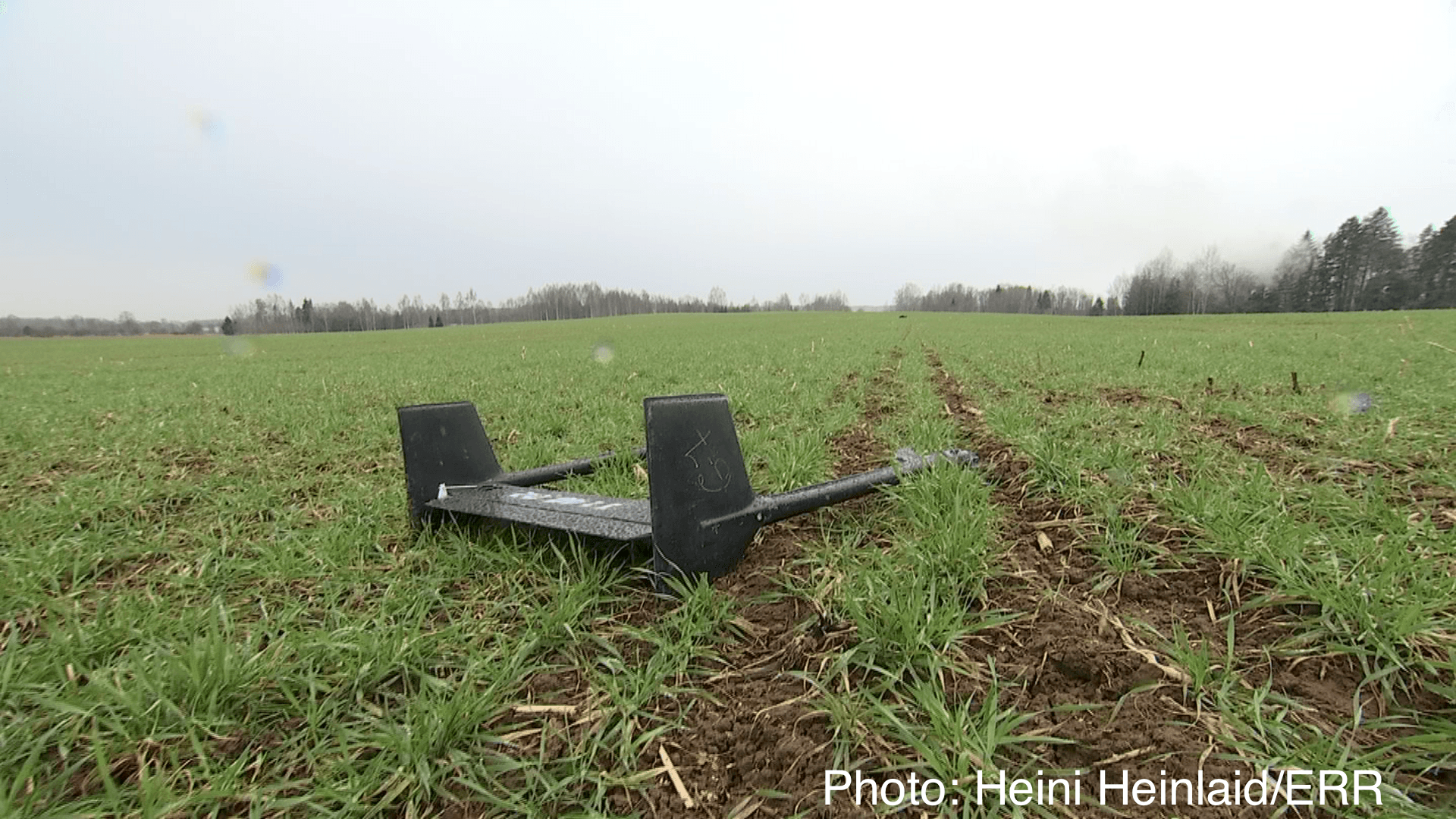
It has been reported by the U.S. that it has deployed its Low-cost Unmanned Combat Attack System (LUCAS), a one-way attack drone, for the first time in combat. While there have been no visual confirmation of it being involved in strikes, a crashed LUCAS is claimed to have been found in the Iraqi desert.
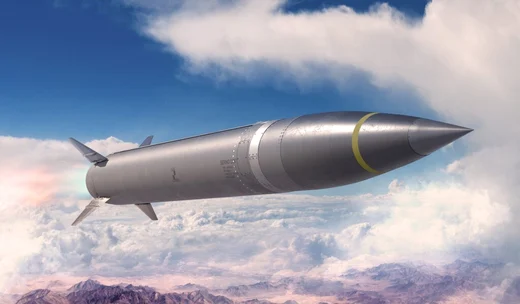
Likewise footage of the Precision Strike Missile (PrSM) being launched by an American M142 was included in a post by US CENTCOM. This too is the combat debut for this munition.
Iran's retaliation
The response by Iran has been widespread, targeting not only Israel and U.S. military installations in the region, but a host of other states not involved in the original attacks. Iran has fired missiles and launched one-way attack drones at targets in the United Arab Emirates, Qatar, Bahrain, Saudia Arabia, Oman, Kuwait and other countries.
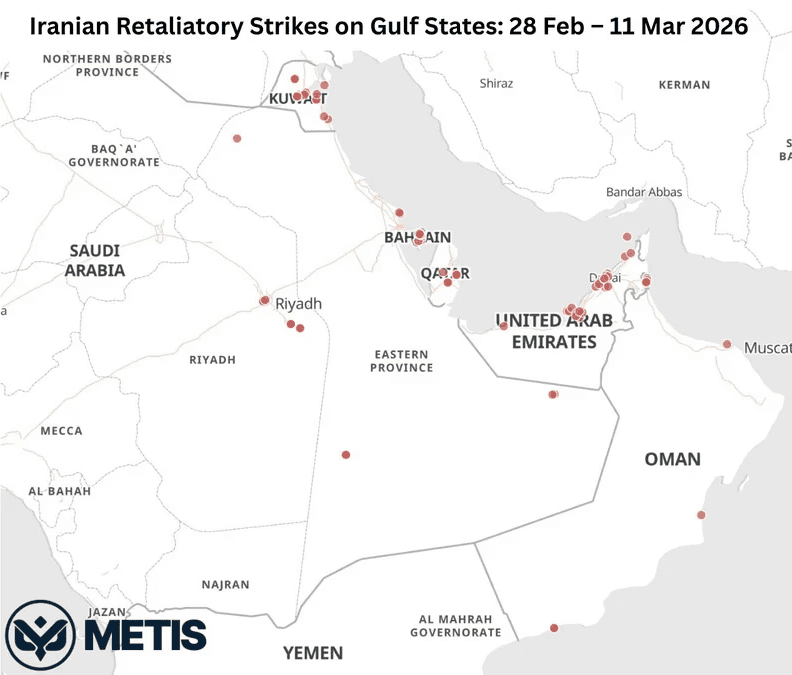
Many of these missiles and drones are intercepted en route to their targets, with notable engagements over Turkey, UAE, Syria and Qatar. However, a significant number still reach their target, causing damage and casualties amongst civilians and military personnel. Some have struck clear military targets including air, naval and forward operating bases, as well as early warning systems and operation centers, while others have hit civilian infrastructure. Reported civilian strikes include ports, international airports, oil refineries, apartment buildings, hotels, data centers, and power plants.
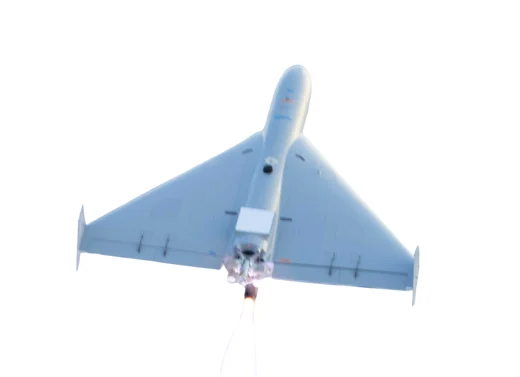
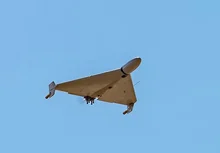
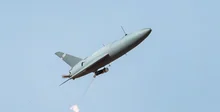
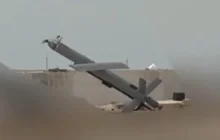
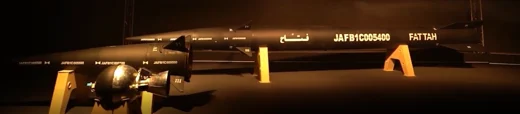
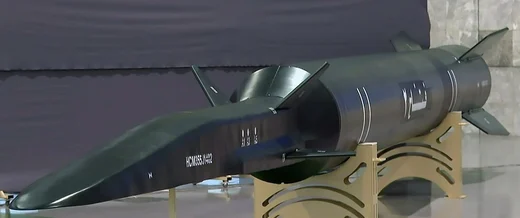
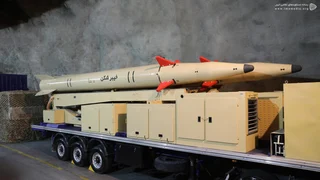
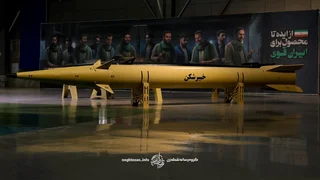
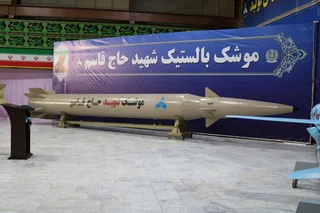
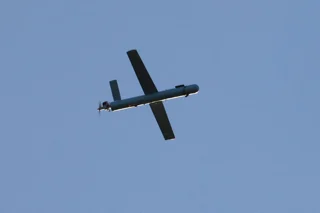
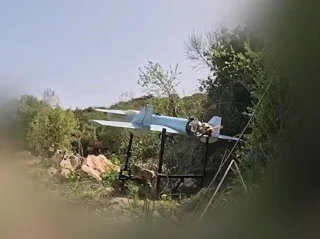
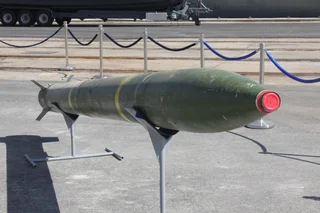
Iran has a large arsenal of long-range missiles and drones available to them, with many of these having been used in combat in recent years. However, some are newer and also seeing their first deployments. A selection of Iran's ballistic missiles and one-way attack drones are shown below, with more being available in METIS.
One-way attack drones

Ballistic missiles
The role played by Iranian proxies
Despite significant setbacks for Iranian proxies in the region over the last several years, Hezbollah in Lebanon and groups in Iraq have showed solidarity and joined in with Iran’s retaliation.
Hezbollah has launched recent strikes into Israel, these targets have included military bases, communications sites, oil refineries and industrial installations.
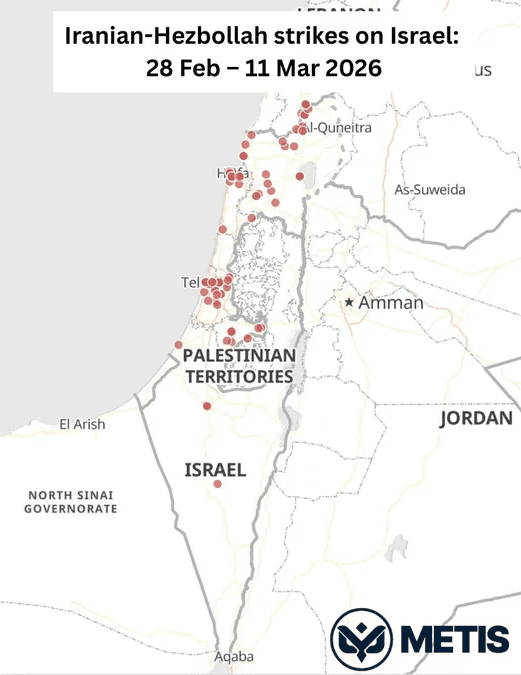
Lebanon is also claimed to be the launch point for the attack on RAF Akrotiri in Cyprus, where a drone reportedly struck a hanger used by American spy planes that are routinely stationed at RAF Akrotiri.
Meanwhile Iran-aligned groups in Iraq have launched missile, rocket and drone attacks against US military bases and buildings that reportedly house US military personnel.
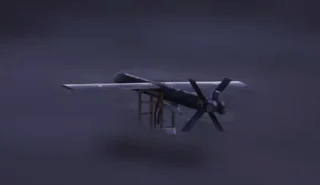
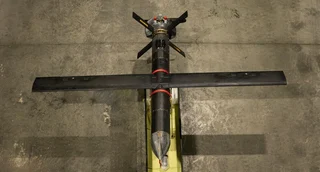
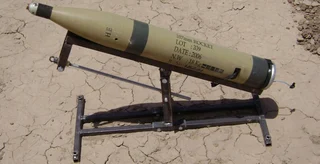
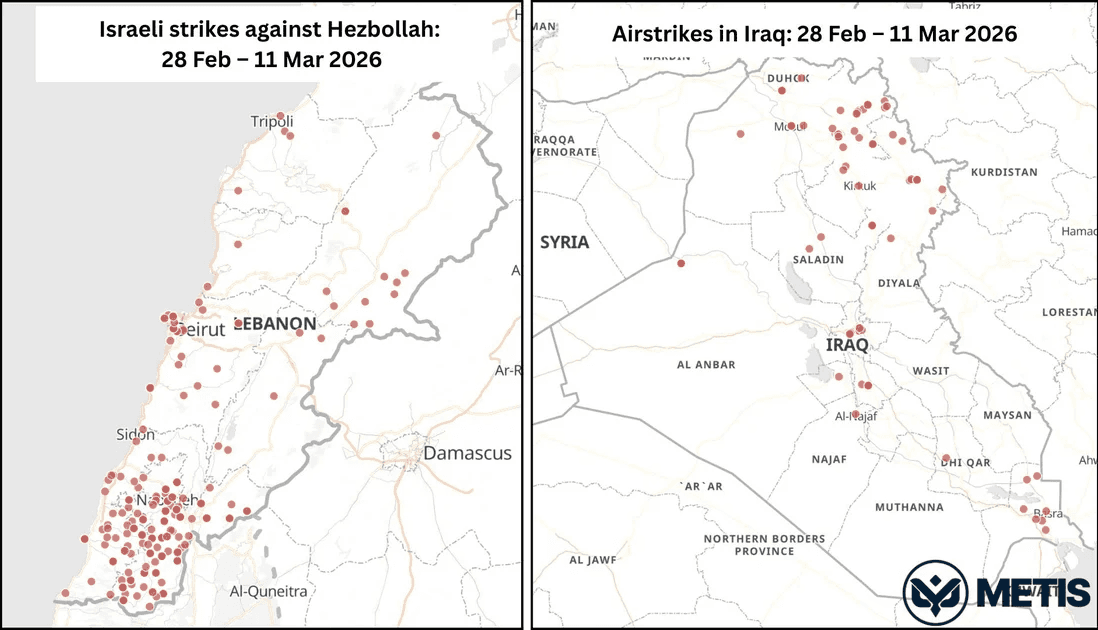
In retaliation, the U.S. and Israeli air campaign has also extended into Lebanon and Iraq. In Lebanon, hundreds of Hezbollah sites have been targeted by Israel, prompting mass displacement in the south and in parts of Beirut. In Iraq, attacks focused on Iran-aligned militia bases.
Conclusion
The opening phase of Operation Epic Fury has rapidly escalated into a multi-theatre confrontation, featuring short- and long-range missile, drone and bomb strikes against diverse targets across the wider region. The pattern of attacks against airbases, command-and-control nodes, nuclear‑related sites, and critical civilian infrastructure underscores both sides’ focus on degrading each other’s military capabilities while exerting broader political and economic pressure.
At the same time, the involvement of Iranian proxies and the proximity of repeated strikes to sensitive nuclear facilities have significantly increased escalation risks, with potential implications for nuclear safety, regional stability, and global energy infrastructure. Continued, systematic monitoring of where attacks occur, what munitions are used, and how targeting patterns evolve will be essential for assessing civilian harm, shifts in military posture, and the likelihood of further escalation in the weeks ahead.
Fenix Insight welcome your use of our data, visualisations, analysis, and other information, but always with proper attribution and a link back to our website. Please read our Attribution Policy for further information.

Source Information
Where our site contains links to other sites and resources provided by third parties, these links are provided for your information only. We have no control over the contents of those sites or resources, and accept no responsibility for them or for any loss or damage that may arise from your use of them. If you find a broken link or a link directing you to website material you feel is unsuitable, please contact us. If you have any queries about information accessed through links, you are advised to check directly with the organisation concerned.

From wildfires to droughts: How extreme weather is reshaping the risks posed by Explosive Remnants of War

Imagery analysis of suspected UAE-origin drones in Iran and Sudan

The Sahel under pressure: Jihadist groups expand and adapt
Escalation by accident: The strategic risks of stray munitions in NATO airspace