
Israel–Hezbollah conflict update: March–April 2026
Following the launch of Operation Epic Fury on 28th February, involving US and Israeli strikes on Iran, Hezbollah resumed cross border attacks into northern Israel. Israel responded with sustained air and ground operations, conducting strikes in southern Lebanon, Beirut, and the Bekaa Valley, while simultaneously expanding ground operations in the south.
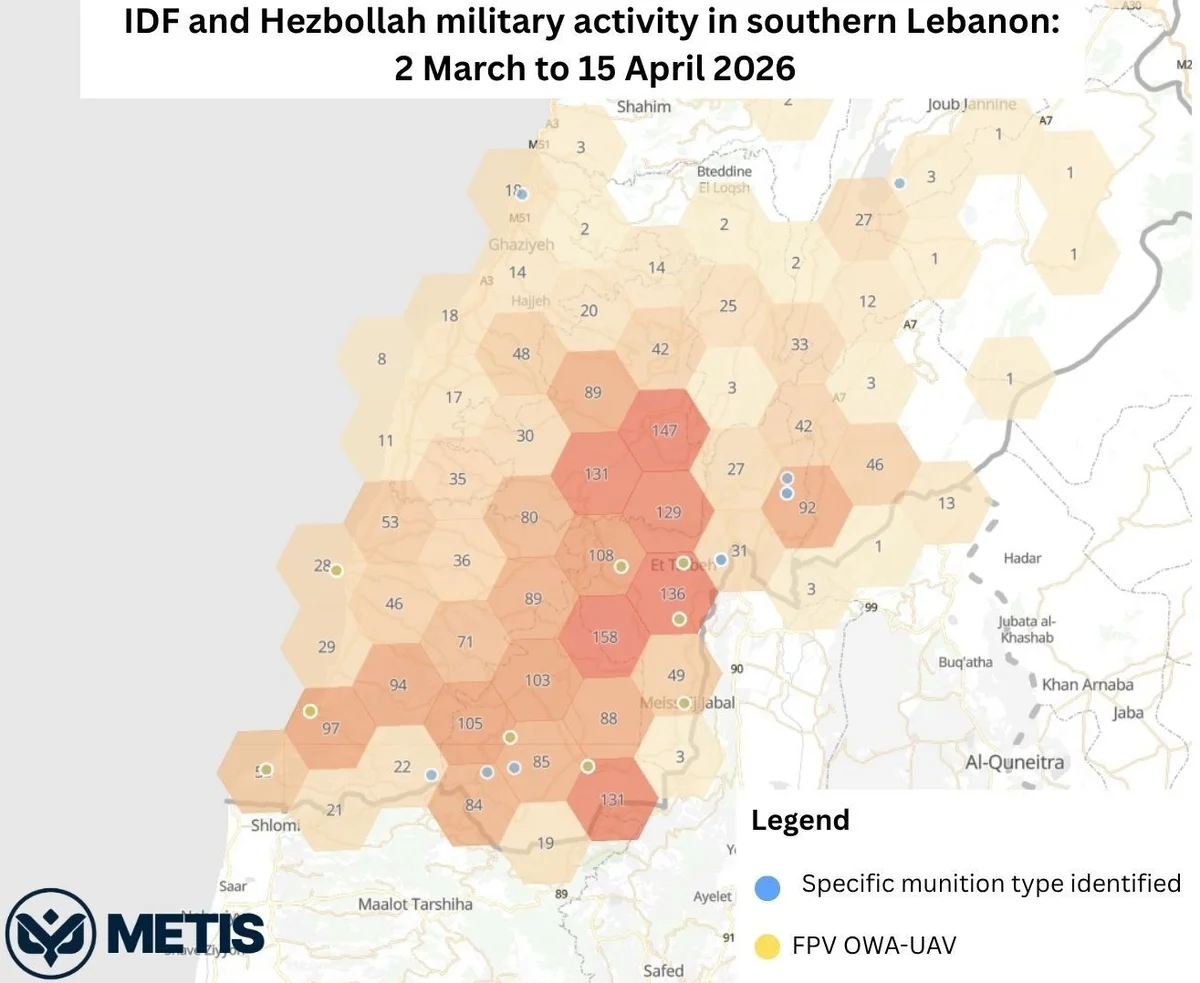

Following the launch of Operation Epic Fury on 28th February, involving US and Israeli strikes on Iran, Hezbollah resumed cross border attacks into northern Israel. Israel responded with sustained air and ground operations, conducting strikes in southern Lebanon, Beirut, and the Bekaa Valley, while simultaneously expanding ground operations in the south.
Israel’s defence minister has stated that these operations aim to degrade Hezbollah’s command structure, weapons stockpiles, and infrastructure, while establishing a security buffer inside southern Lebanon. The buffer would extend IDF control to the Litani River and would remain in place until Israel determines that the threat posed by Hezbollah has been sufficiently mitigated, with the stated objective of protecting Israeli communities in the north.
IDF and Hezbollah military activity in southern Lebanon
Over the past week, Hezbollah claimed attacks against IDF ground units all along the border, including in Bint Jbeil district (Bint Jbeil, Rashaf), Tyre district (Chamaa), and Marjayoun district (Meiss El Jabal, Al-Adisa, and along the Taybeh-Deir Siryan road). Hezbollah reports the use of rockets, missiles, and one-way attack drones to target Israeli soldiers and military vehicles.
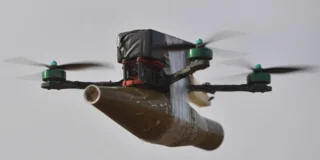
As reported by Fenix Insight previously, Lebanon is also seeing the rise of one-way attack first person view (FPV) drones. Hezbollah has targeted numerous IDF vehicles with FPV drones in recent weeks, even employing fibre-optic controlled ones which are immune to electronic warfare jamming. This is likely to increase in use as it has in many other conflicts across the world. In a recent event, the IDF published footage of an FPV drone being used to target a person stated as a ‘Hezbollah operative’ in the town of Bint Jbeil.
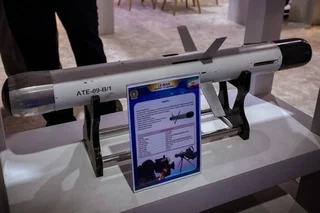
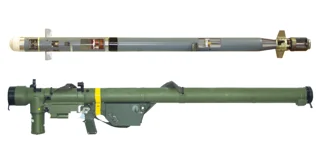
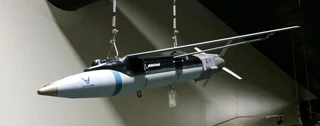
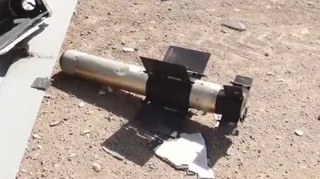
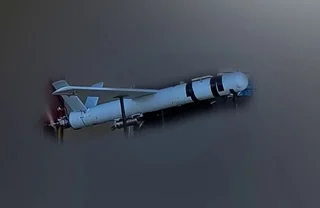
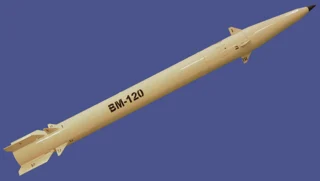
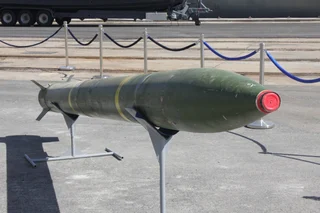
Some examples of munitions used are below, with further detail available in METIS.
 |  |  |
|---|---|---|
Missile | Missile | Weaponised drone |
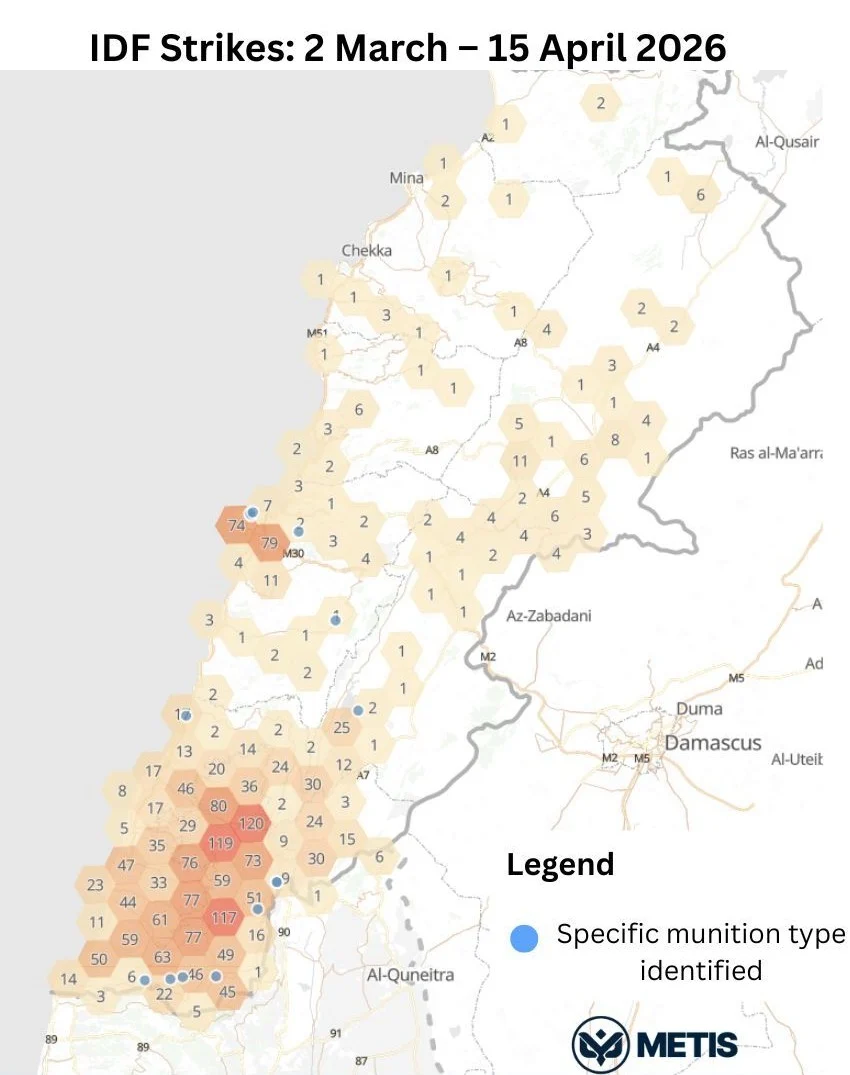
IDF airstrikes in Beirut and the Bekaa valley
Since the 2nd of March, the IDF has resumed sustained airstrikes in Beirut and the Bekaa Valley. Israeli authorities state that these operations aim to target Hezbollah’s headquarters, military facilities, and command‑and‑control infrastructure. Multiple areas of Beirut have been affected, including neighbourhoods such as Tallet el Khayat, which had not previously been routinely targeted. Civilian casualties, including injuries and fatalities, have been reported following these strikes.
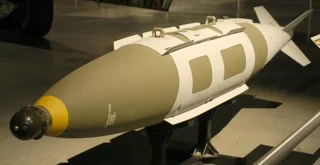
A mix of guided and unguided air-delivered weapons are employed by Israel. Smaller targets are commonly engaged with Mikholit or GBU-39 bombs, while GBU-31 and GBU-32 JDAM are dropped on larger targets.
Hezbollah strikes in Israel
Despite significant degradation of its forces and capabilities since IDF ground operations began in October 2024, Hezbollah is regularly striking into Israel, predominantly targeting IDF bases and Israeli defence industry facilities in the north. However, many of the missile, rocket and drone strikes target civilian areas. While a portion of these are intercepted by Israeli air defences, significant damage is still occurring from those that reach their targets.
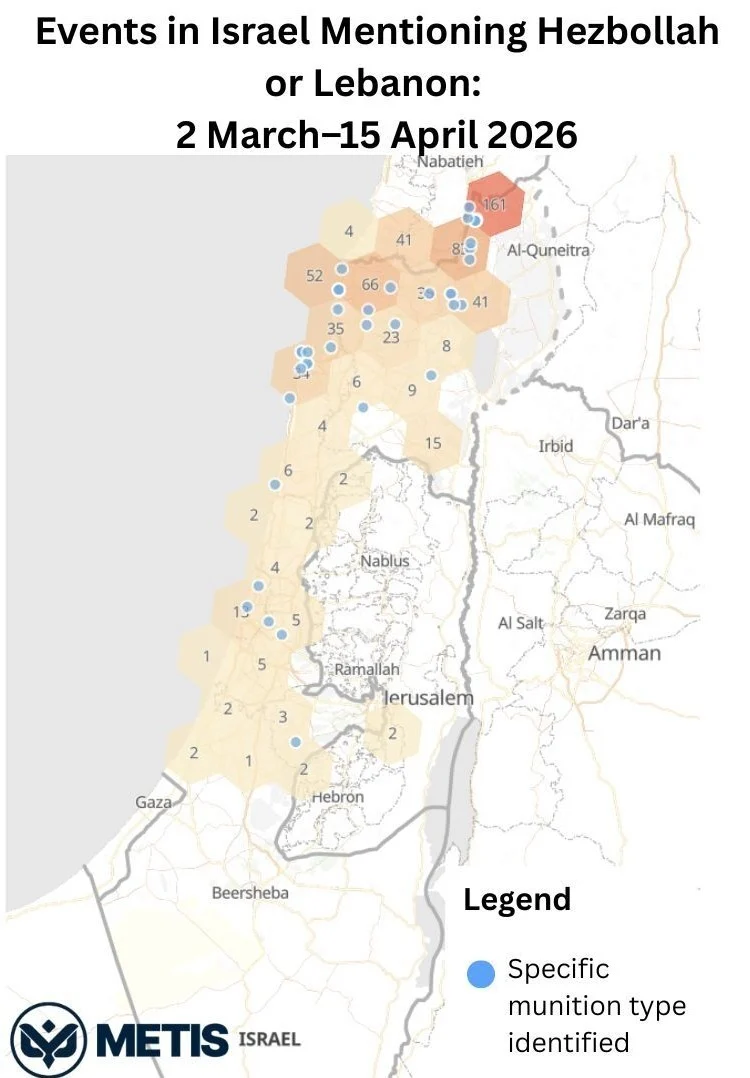
For long-range strikes into Israel, Hezbollah deploys a range of missiles, rockets and one-way attack drones. Many of these munitions are Iranian in nature, either being supplied complete or in parts, or the designs and expertise is provided to manufacture in Lebanon itself.
Meanwhile, during and since the fall of Assad’s regime in Syria, smuggling across the Lebanon-Syria border and throughout Lebanon itself has occurred. Some of the most prolific munitions launched by Hezbollah into Israel are shown below.
A rare firing of a local copy of the C-802 anti-ship cruise missile occurred on the 5th of April. This was claimed by Hezbollah to target an Israeli warship off the coast of Lebanon, while other media claimed a Royal Navy ship was fired at. It is unclear which was targeted, with confirmation from the Israeli and British governments that no ships were struck.
Conclusion
Despite the current tenuous ceasefire between Israel, the US and Iran, there is no cessation of hostilities in Lebanon. IDF operations continue at a similar, or at times, increased pace. Meanwhile Hezbollah still responds strongly, targeting IDF forces in Southern Lebanon and striking into Northern Israel.
With Hamas rejecting a disarmament plan, intense conflict with Hezbollah, and significant uncertainty over the ceasefire with Iran, Israel has elected to extend the time reservists are required to serve. Since the Hamas attack on October 7th 2023, Israel has continued intense military operations in the region, and is likely feeling the strain of maintaining these.
Despite talks between Israel and Lebanon, it is unclear how long this current conflict will last, or if it will expand further. However, in the meantime, while no ceasefire is agreed, it is expected that: the use of FPV drones will increase; intense bomb, missile, rocket and drone strikes will still occur, leading to destruction and further death, injury and displacement of civilians; and the ongoing risk of unexploded ordnance will increase.
Fenix Insight welcome your use of our data, visualisations, analysis, and other information, but always with proper attribution and a link back to our website. Please read our Attribution Policy for further information.


From wildfires to droughts: How extreme weather is reshaping the risks posed by Explosive Remnants of War

Imagery analysis of suspected UAE-origin drones in Iran and Sudan

The Sahel under pressure: Jihadist groups expand and adapt
Escalation by accident: The strategic risks of stray munitions in NATO airspace