Escalation by accident: The strategic risks of stray munitions in NATO airspace
Escalation by accident: The strategic risks of stray munitions in NATO airspace
Latvia’s government has collapsed after two Ukrainian drones - likely diverted by signal jamming - strayed into its airspace, crashing into an oil storage facility near Rezekne. Although no casualties were reported, the incident triggered a significant political crisis, culminating in the resignation of Prime Minister Evika Siliņa. The event highlights the growing risks posed by cross-border spillover from the war in Ukraine.
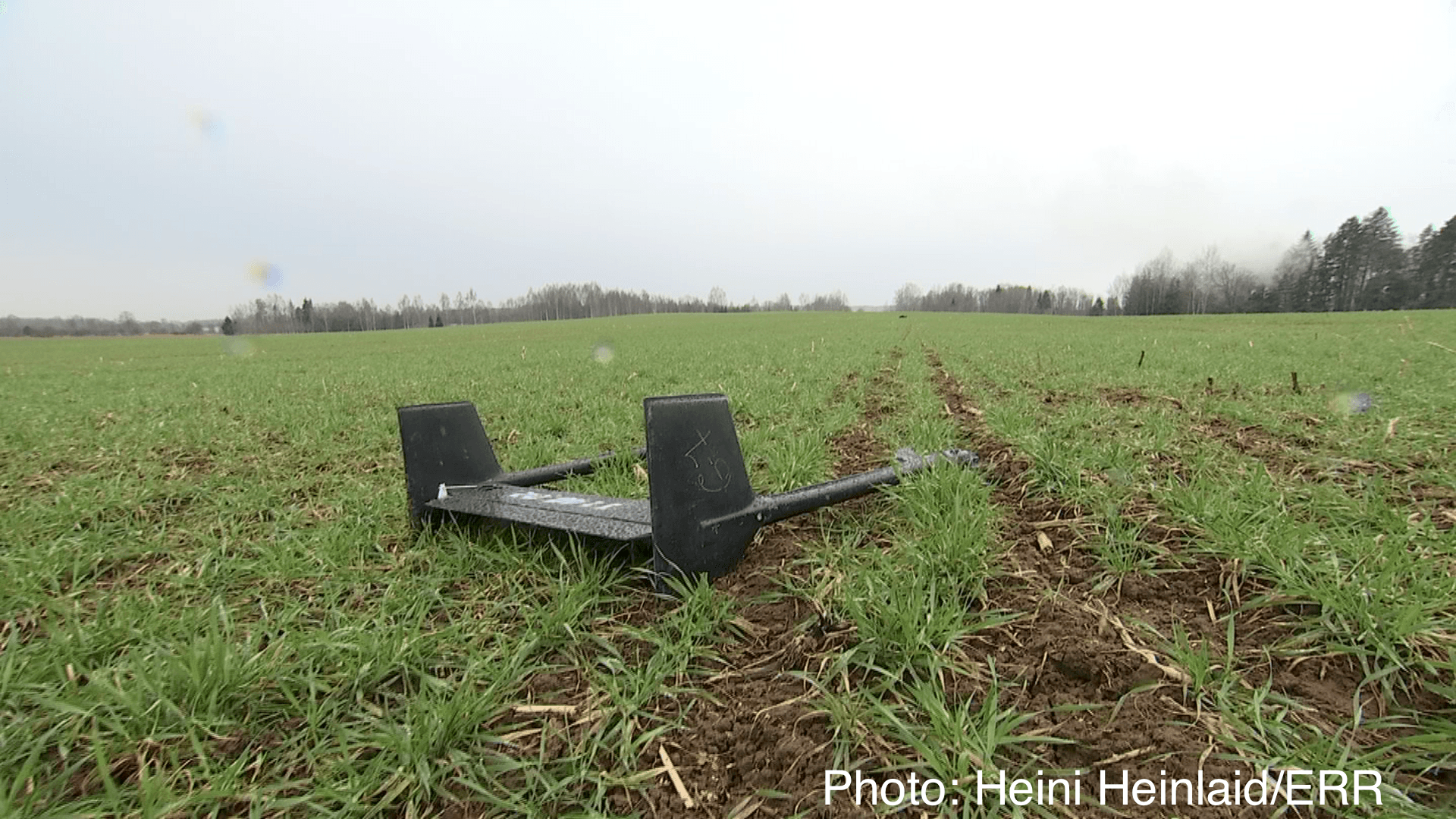

Latvia’s government has collapsed after two Ukrainian drones - likely diverted by signal jamming - strayed into its airspace, crashing into an oil storage facility near Rezekne. Although no casualties were reported, the incident triggered a significant political crisis, culminating in the resignation of Prime Minister Evika Siliņa. The event highlights the growing risks posed by cross-border spillover from the war in Ukraine.
As the conflict enters its fifth year, the intensity remains high despite Russian claims that it may be nearing an end. Beyond Ukraine and Russia, spillover effects are placing pressure on neighbouring states and NATO, while also creating potential pretexts that could be exploited by Russia to justify broader regional action.
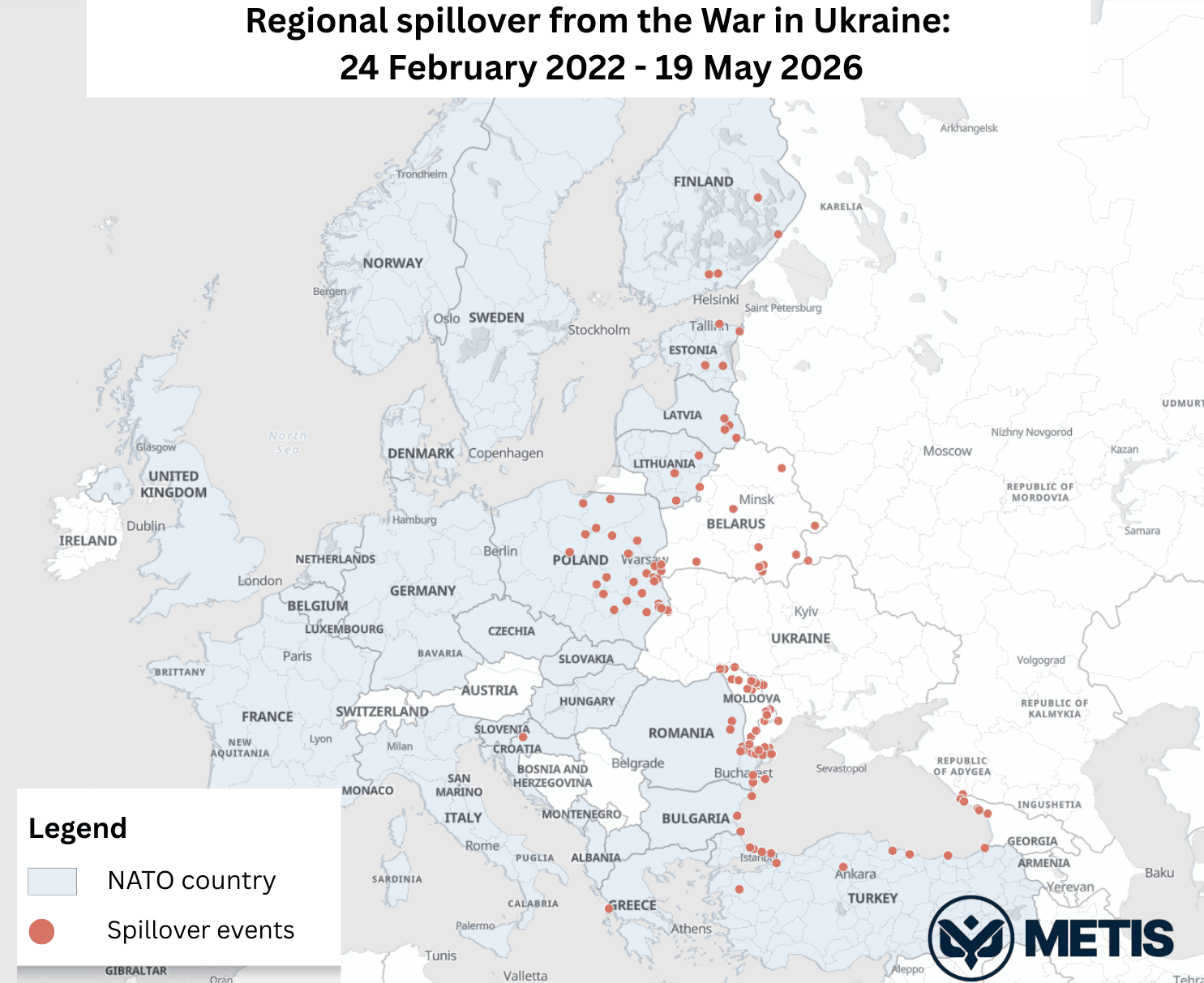
At Fenix Insight, we have documented dozens of spillover events, spanning a multitude of NATO and non-NATO countries within METIS. These include one-way attack (OWA) aerial and naval drones, missiles, and sea mines. This dataset captures only confirmed cases where a munition or platform has crashed, impacted, or been shot down, and excludes instances of transiting through national airspace.
It also does not account for the smuggling and wider proliferation of weapons and explosives into Europe and other regions, which remains a significant and separate concern. Likewise, direct attacks on shipping in the Mediterranean and Black Sea are not included in the map above.
Drones and missiles
Debris of missiles and drones have been found in Poland, Moldova, Romania, Belarus, Abkhazia, Estonia, Finland, Latvia, Turkey, Lithuania and Bulgaria. With the first record in METIS dating as early as May 2022.
Missiles were some of the earliest munitions to cross into neighbouring countries, with the only known fatalities from these events occurring in Poland, where an air defence missile impacted and killed two people in November 2022. Missile debris has also been reported in Moldova, Romania, and Belarus along the borders with Ukraine.
With the development and mass deployment of drones over the course of the war in Ukraine, events of these crashing outside of the conflict countries has increased significantly. Russian and Ukrainian OWA, reconnaissance and decoy drones, now account for the majority of munitions recovered in neighbouring countries, reflecting both their scale of use and their susceptibility to disruption.
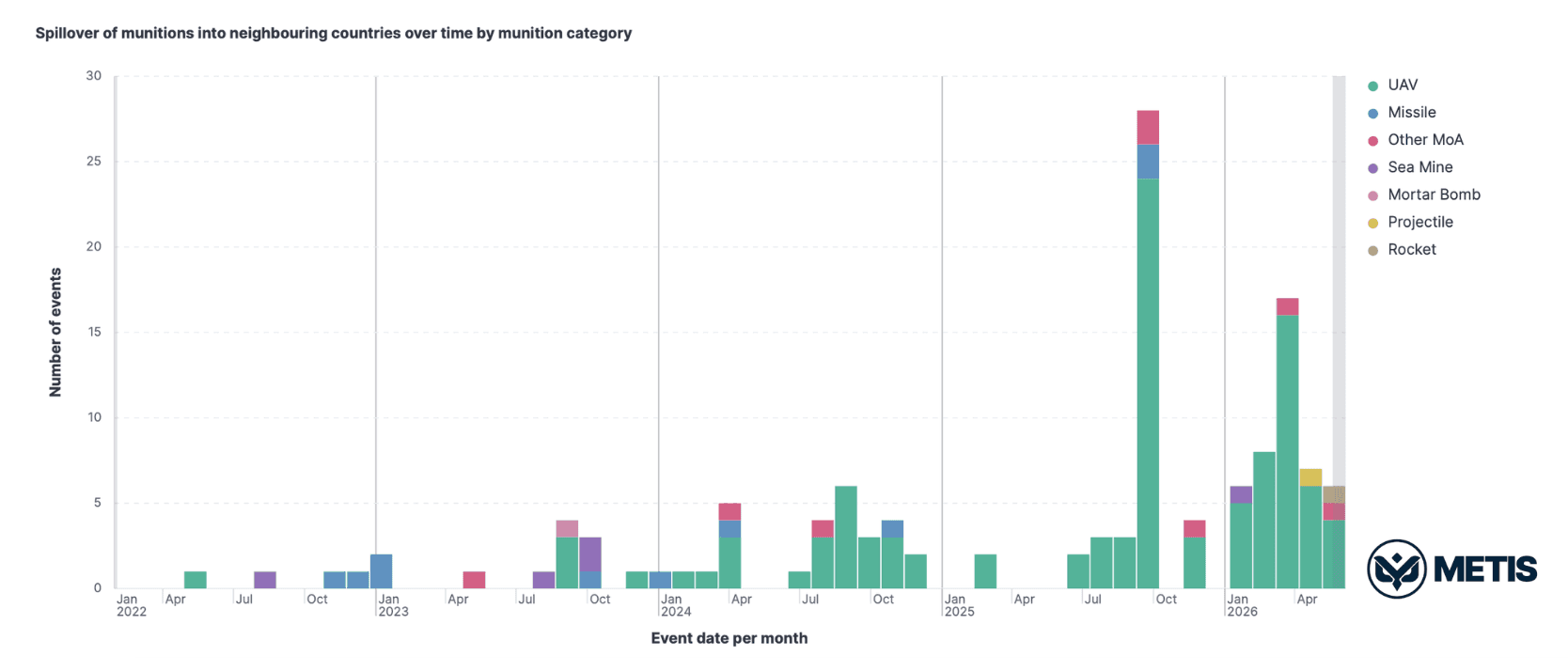
A mixture of Russian and Ukraine OWA, reconnaissance and decoy drones have been reported to crash harmlessly, or in some cases cause damage. In most cases, such incidents are attributable to electronic warfare interference, navigation errors, or technical faults.
Most of the countries affected are not used as flight paths by either Russia or Ukraine. Only Belarus is frequently used as a transit corridor for Russian drones, while Ukrainian drones occasionally stray across its border. Although some sources have claimed that Ukraine has used the Baltic states as a route to strike targets in Russia, these assertions have been identified as Russian disinformation.
One of the most significant and complicated instances occurred on 10 September 2025 in Poland, where numerous Russian Gerbera decoy drones entered Polish airspace and crashed in various locations. This triggered air defences during the incident, however there was no clear NATO response to this beyond verbal condemnation. Due to the numbers involved, it is unclear how so many Russian drones unintentionally entered NATO airspace, and is possibility a test of both NATO's air defence capability, but also their resolve.
Sea mines and naval drones
Due to mining of the Black Sea, and targeting of ships in both the Black Sea and Mediterranean, this has led to spillover into countries such as Turkey, Greece, Bulgaria and Romania.
Sea mines, like the MyAM, have been found in the waters nearby to the coast of several countries around the Black Sea, or have washed up on their shores. It is likely these have broken free of their moorings, leading to them drifting throughout the region, posing an ongoing risk to maritime traffic and civilians on the coastline.
OWA naval drones have become a potent weapon for targeting military and commercial ships, with strikes occurring in the Black Sea, Mediterranean and as far as the African coast. An OWA naval drone was found fully intact with its motor running in a cave in Greece in early May, with it being towed to Vasiliki for investigation before being destroyed. This is assumed to have been used to target Russian shipping in the Mediterranean, however the exact model of naval drone is currently unknown.
Other OWA naval drones have been found and destroyed off the coast of Romania, possibly having come adrift as a result of weather, mechanical failure, or combat-related circumstances. Similarly, an OWA naval drone found floating in Bulgarian territorial waters last month was destroyed by the Bulgarian Navy. Other examples are available in METIS.
Conclusion
Cross-border spillover has become an increasingly visible feature of modern conflicts, as munitions and debris stray beyond intended targets into neighbouring states. These events raise concerns over escalation risks, civilian safety, and the widening geographic footprint of conflicts.
The increased frequency of these events raises the risk of a confrontation between Russia and NATO. While Ukraine is likely to receive less scrutiny, should casualties or significant damage occur from unintended spillover, then this would create extreme political challenges.
Russia may also use these events as a pretence for attack on the Baltic states, or other members of NATO, who are deemed to be assisting Ukraine too directly. Russia’s attempt at disinformation relating to drone flightpaths already forms part of a justification for action, which could lead to direct conflict.
Understanding the increase in spillover events, the threat they pose, and the munitions being encountered is vital to managing the risk to civilians, the military and infrastructure within the countries that neighbour the Russo-Ukraine conflict, and the risk of a wider conflict occurring.
Fenix Insight welcome your use of our data, visualisations, analysis, and other information, but always with proper attribution and a link back to our website. Please read our Attribution Policy for further information.