Imagery analysis of suspected UAE-origin drones in Iran and Sudan
The proliferation of drones is well known throughout the world, however imagery suggests a link between two ongoing conflicts, one that commands significant international attention and another that remains largely underreported. Fenix Insight has assessed imagery of drones in both Iran and Sudan, indicating these are of UAE origin.


The proliferation of drones is well known throughout the world, however imagery suggests a link between two ongoing conflicts, one that commands significant international attention and another that remains largely underreported. Fenix Insight has assessed imagery of drones in both Iran and Sudan, indicating these are of UAE origin.
UAE involvement in the Iran war
The Iran war began on 28 February 2026 with Operation Epic Fury, a U.S.-led military campaign targeting Iran’s missile, naval, and nuclear infrastructure, as well as senior members of the government and military. What began as a focused campaign quickly evolved into a broader regional conflict, marked by ongoing bombing and long-range missile strikes against Iran and it's proxy groups. Iran retaliated with attacks against nearby US bases and ships, Israel and the Gulf States.
This led to greater instability across the Middle East, ongoing kinetic operations, the reintroduction of Houthi operations, and significant issues for commercial shipping with the associated economic impact. Fenix Insight examined the opening phase of the conflict in a SITREP in March.
One of the key targets of Iran’s retaliatory campaign has been the United Arab Emirates (UAE). Since the outbreak of hostilities, Iran has launched hundreds of ballistic and cruise missiles, alongside large numbers of one-way attack (OWA) drones, against UAE territory. Although air defence systems have intercepted a substantial proportion of these threats, a significant number have penetrated defences and struck targets across the country.
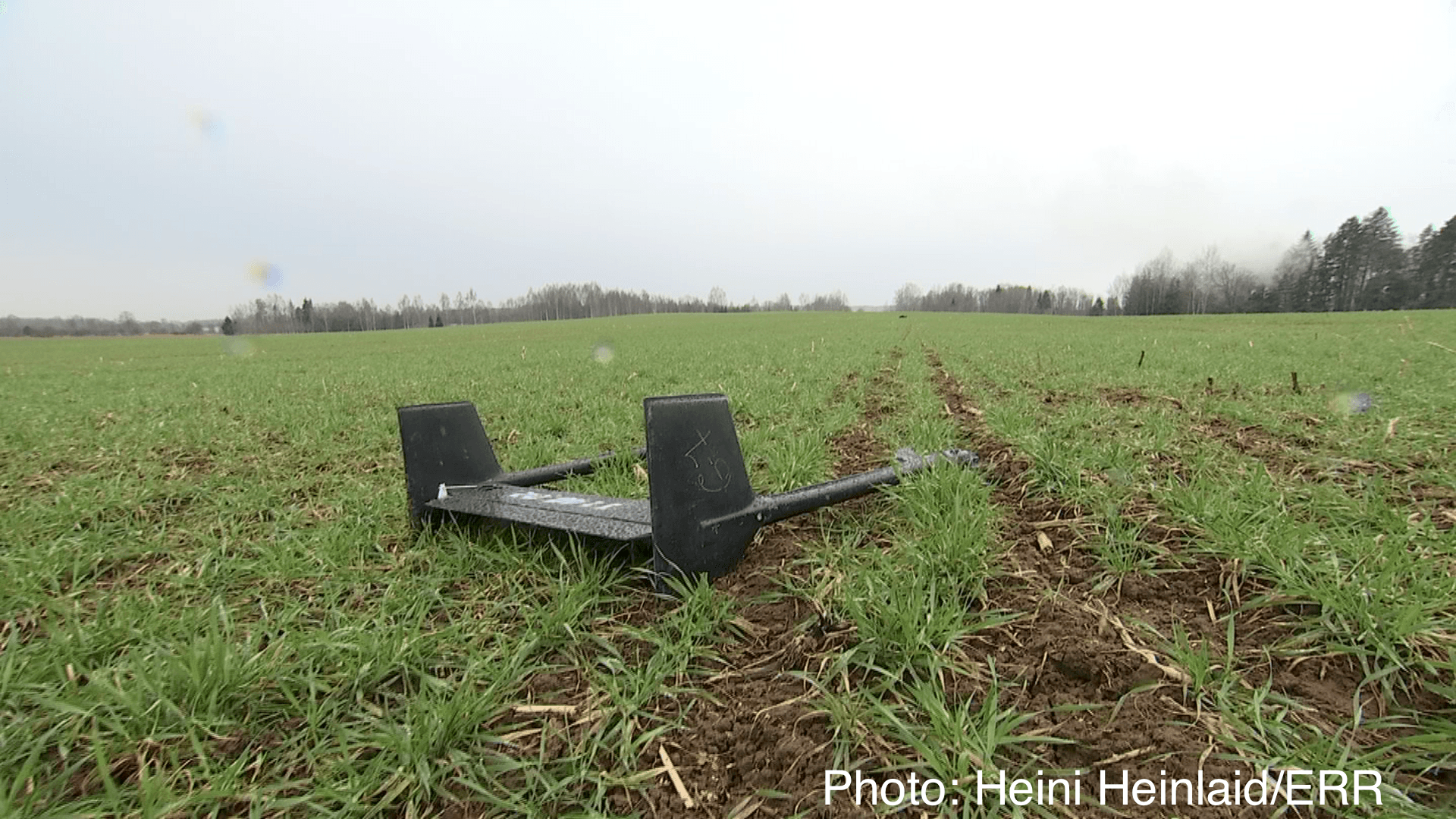
In the early stages of the conflict, the UAE was assessed as playing a primarily defensive role, focused on protecting its territory and critical infrastructure from Iranian attacks. However, emerging evidence suggests that its involvement may have extended beyond defensive operations after a crashed drone was found in April 2026 near to the village of Mishi, Iran. This was initially reported as an Israeli Orbiter, however imagery suggested it was of UAE origin. The exact designation is unknown, but it is believed to be of the Yabhon family of drones, produced by Adcom Systems. A warhead that very closely resembles the EDGE-Group ‘Modamer’ was found with the crashed drone, with further detail provided later in this report.
 | 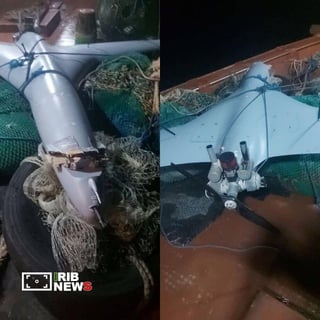 |
 | The exact designator is unknown, so it is currently referred to as the Yabhon-type.
|
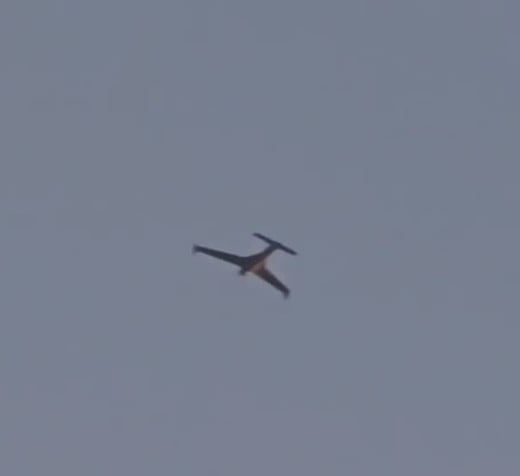
Crashed drones in March and April are also believed to be the same model. An attack on Bandar Abbas port in July showed footage of the drone in flight, matching the same Yabhon-type design as the others from earlier in the conflict. These attacks strongly suggest that the UAE was responding directly to Iran’s hostility with attacks using their own drones.
Additional evidence emerged later in August when the Iranian Revolutionary Guard Corps (IRGC) exhibited a range of wreckage purportedly from American and Israeli aircraft shot down during the conflict. The display included wreckage of several drones that appear to be the Emirati Yabhon-type UAV.
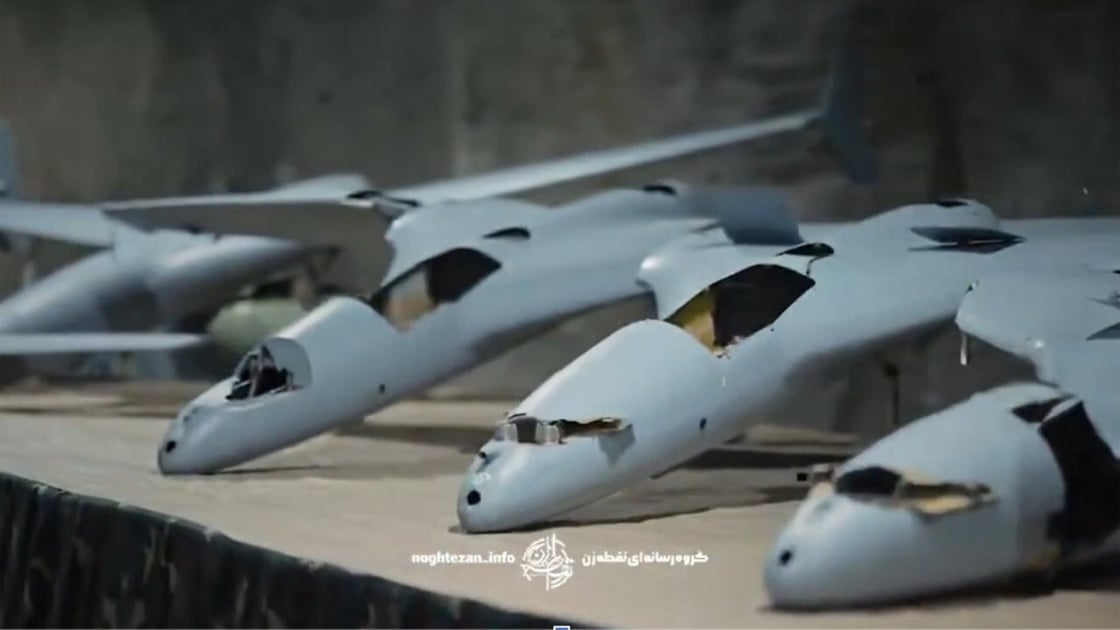
The same warhead from the Yabhon-type has been seen in Sudan, fitted to drones used by the Rapid Support Forces (RSF) to target the Sudanese Armed Forces (SAF).
Support to the RSF in Sudan
The war in Sudan began in April 2023 as a power struggle between the SAF and the paramilitary RSF. Rooted in the collapse of the country’s transition towards civilian rule, the conflict has devastated communities, displaced millions and created an acute humanitarian crisis. Fenix Insight previously covered the ongoing civil war in a SITREP in October 2024.
Since the outbreak of hostilities, there has been extensive reporting alleging that the UAE has supplied arms to the RSF and affiliated non-state actors in Sudan, including a Guardian investigation Fenix Insight previously collaborated with.
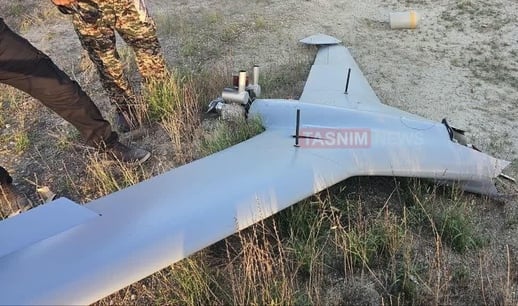
Some drones in Sudan are believed to be of UAE origin, however these are different to the Yabhon-type. One has previously been seen on display by the UAE during the ‘Desert Tiger 6’ exercise between UAE and Malaysian armed forces, while the second contains the same warhead as seen in the Yabhon-type (again very closely resembling the Modamer). The designators for both drones are currently unknown but they have been identified in Sudan from 2024 onwards.
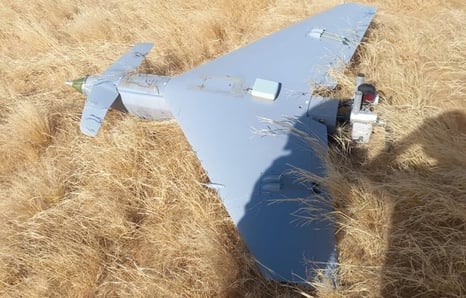 |  |
DELTA-WING OSINT recorded by Fenix Insight on "Looks like this is the RSF’s OWA drone launch site near Nyala Airport in 🇸🇩 Sudan’s South Darfur." | DUAL-WING |
The warhead link
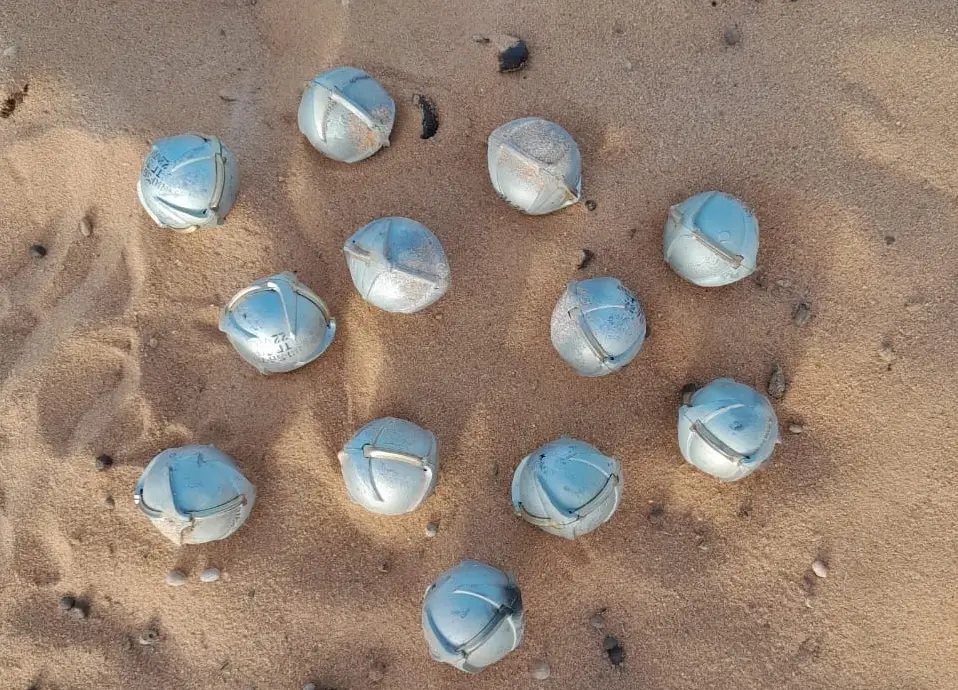
The same, or closely related, warhead was identified in footage from both Iran and Sudan. The design bears a strong resemblance to the UAE-based Halcon (EDGE Group) ‘Modamer’ high-explosive fragmentation warhead for drones. The fuze fitted to the warheads is similar to that seen produced by the Adasi (EDGE Group) for the RASH-1M guided mortar bomb, which is used as a UAV-dropped aerial bomb.
 | 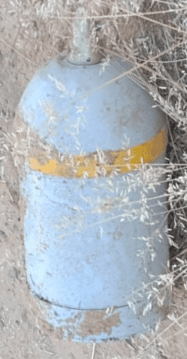 | 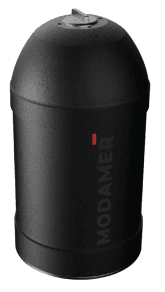 |
Warhead from drone shot down near Hormozgan, Iran 29th March 2026 | Warhead from drone shot down near Al-Obeid, Sudan, 8th January 2025 | Halcon (EDGE Group) ‘Modamer’ high-explosive fragmentation warhead for drones |
Conclusion
Recent recoveries from Iran have provided fresh insight into drones and warheads previously observed in Sudan. There has been no public acknowledgement from the UAE that they are providing arms to actors within Sudan, or have launched their own attacks on Iran.
However, the available imagery strongly supports the view that the UAE did in fact launch its indigenous OWA drones against Iran in response to attacks, and has been providing munitions to the RSF in Sudan.
Fenix Insight welcome your use of our data, visualisations, analysis, and other information, but always with proper attribution and a link back to our website. Please read our Attribution Policy for further information.