
Key updates on the conflict between the Rapid Support Forces and Sudanese Armed Forces
Key updates on the conflict between the Rapid Support Forces and Sudanese Armed Forces
Since April 2023, Sudan has been embroiled in a devastating civil war with dire consequences for civilians and which is largely overlooked internationally. The conflict pits the Sudanese Armed Forces against the Rapid Support Forces, with intense fighting centered on Khartoum and Darfur. Recent offensives have seen ground and air battles causing severe destruction and civilian casualties.
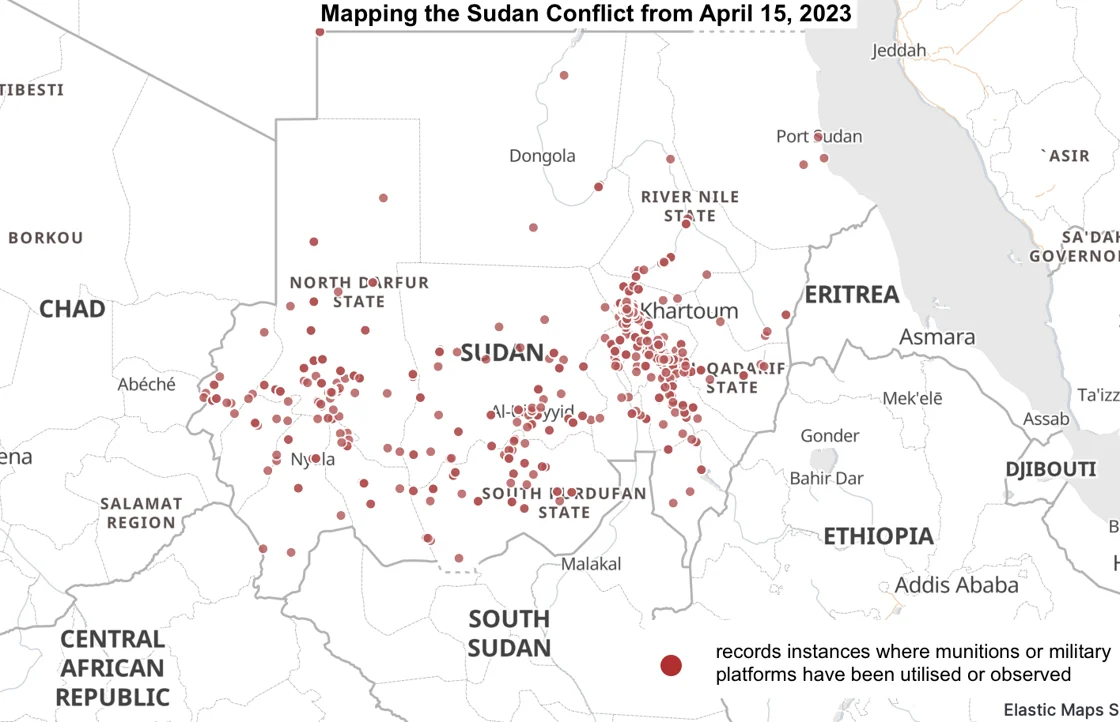

Since April 2023, Sudan has been engaged in a civil war that rarely garners much international attention, despite it being one of the world’s worst humanitarian crises, and the site of another power struggle by foreign actors. The country is predominantly split between control by the Sudanese Armed Forces , aligned to the recognised government, and the Rapid Support Forces, a paramilitary organisation that had, prior to the conflict, allied itself with the Sudanese Armed Forces. Each entity holds large swathes of the country, where they impose their will, with the majority of the known conflict centred on cities and other urban areas.
The battle for Khartoum
The situation in the capital city of Khartoum had remained in a stalemate for the past year, under Rapid Support Forcescontrol, with the adjacent cities of Omdurman and Khartoum Bahri mostly under Sudanese Armed Forces control. Air strikes are a common occurrence, with the government utilising its air power advantage, leading to widespread destruction and displacement of the civilian population.
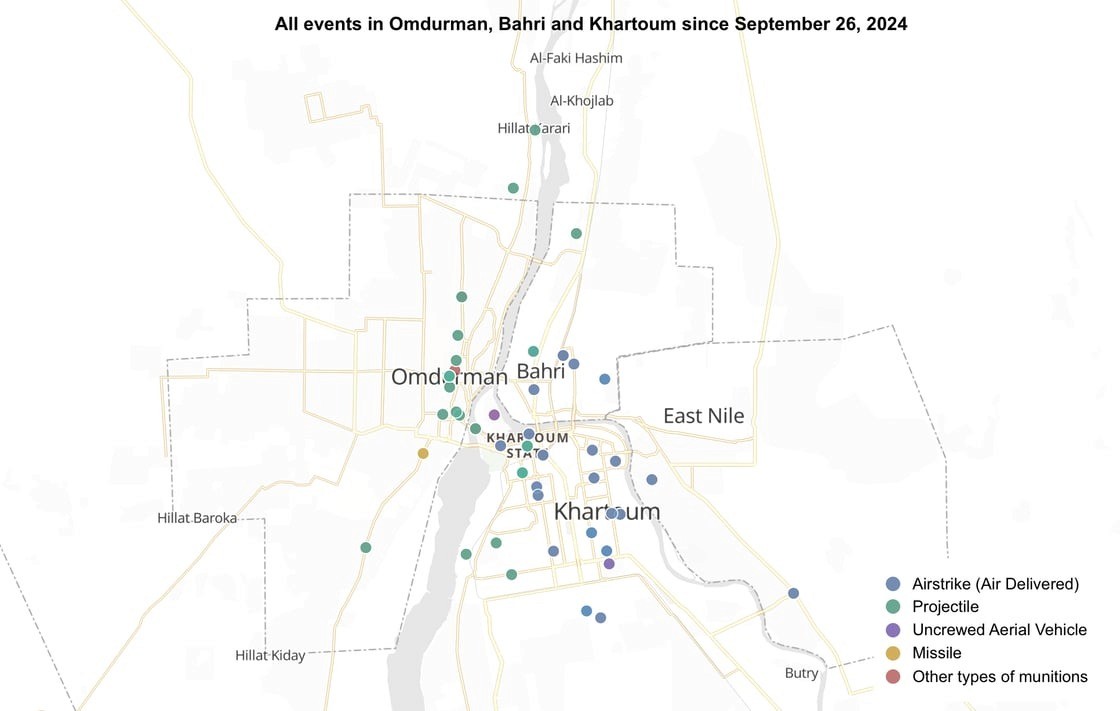
However, on September 26th, the Sudanese Armed Forces launched a major offensive with strikes by crewed and uncrewed aircraft, before ground forces captured and moved across several bridges into Khartoum. A pincer movement from Omdurman to the west, and Khartoum Bahri to the north, lead to Rapid Support Forces forces falling back in disarray, allowing the Sudanese Armed Forces to form a bridgehead. While this is a tactical and operational win for the Sudanese Armed Forces, it is unlikely to bring an end to hostilities, instead just exacerbating the conflict and destruction within Khartoum itself.
Recent events in Darfur
Approximately 800 km from Khartoum, in the city of Al Fashir and the wider area of Darfur, it is a different story. The Rapid Support Forces is the dominant force, with some of the most intense fighting occurring in the city. There are reportedly limited Sudanese Armed Forces ground forces present in the city, instead relying on air support to strike Rapid Support Forces positions and provide replenishment. The use of air power in this urban setting has inevitably led to the targeting of civilian infrastructure, including several of the city’s main hospitals. Artillery shelling by the Rapid Support Forces, including the use of 23x152 mm ZSU-23-2 anti-aircraft cannons for engaging ground targets, has also caused extensive damage to hospitals and the electricity power plant to the south-east of Al Fashir .
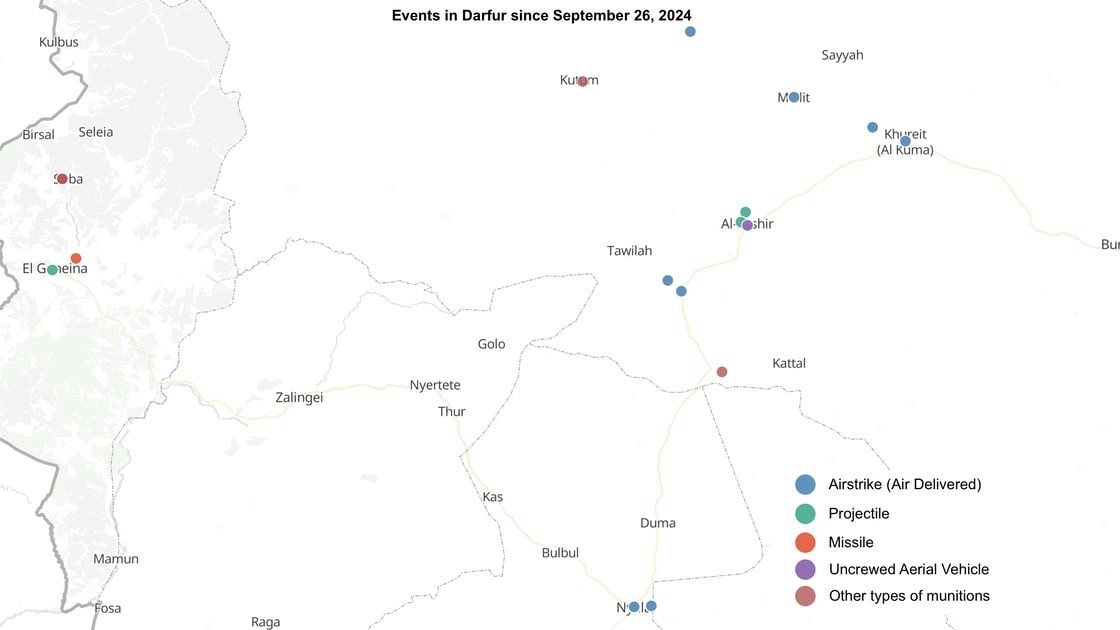
Recently the Sudanese Armed Forces have conducted multiple airstrikes against Nyala, Geneina, Melit and Koma. Notably, they have targeted the airports in both Nyala and Geneina. There are reports of some Rapid Support Forces troops leaving Al Fashir to provide support in rural Darfur, as well as in Khartoum to counter the Sudanese Armed Forces operation discussed above.
"Army warplanes bomb Nyala and Geneina airports"
"Detailed Report on the Aerial Bombing of Civilian Areas in Koma Locality, North Darfur"
Foreign involvement
Numerous foreign actors are fuelling this conflict, fighting by proxy to gain strategic advantages in a country rich in gold, with access to the Red Sea and borders with South Sudan, which holds the third-largest oil reserves in Sub-Saharan Africa. These include Egypt, Iran, Russia, Wagner and the United Arab Emirates (UAE). There have also been some reports of the presence of Ukrainian special forces on the ground, yet this is still to be verified.
Unlike the Sahel conflict, which is predominantly small arms and projectiles (see Fenix Insight situation report ‘Jihadist insurgencies in the Liptako-Gourma region’ from the 19th of September), the Sudan civil war features more complex weapons. Below are some examples of munitions reported in Sudan and their country of origin.
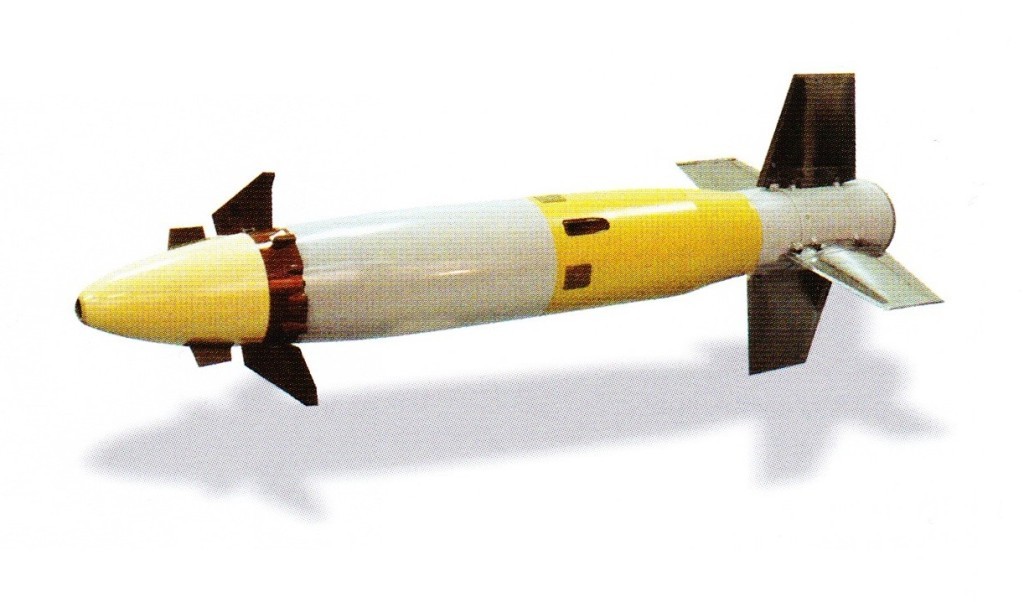
RUSSIAN MUNITION: 9M133-1 |
|---|
The 9M133-1 is a Russian Federation export, laser beam-riding, anti-tank guided missile (ATGM), which is fitted with a tandem shaped charge (high explosive anti-tank, abv. HEAT) warhead system. |
Use of munition captured in METIS: |
 |
IRANIAN MUNITION: QAEM-5 |
|---|
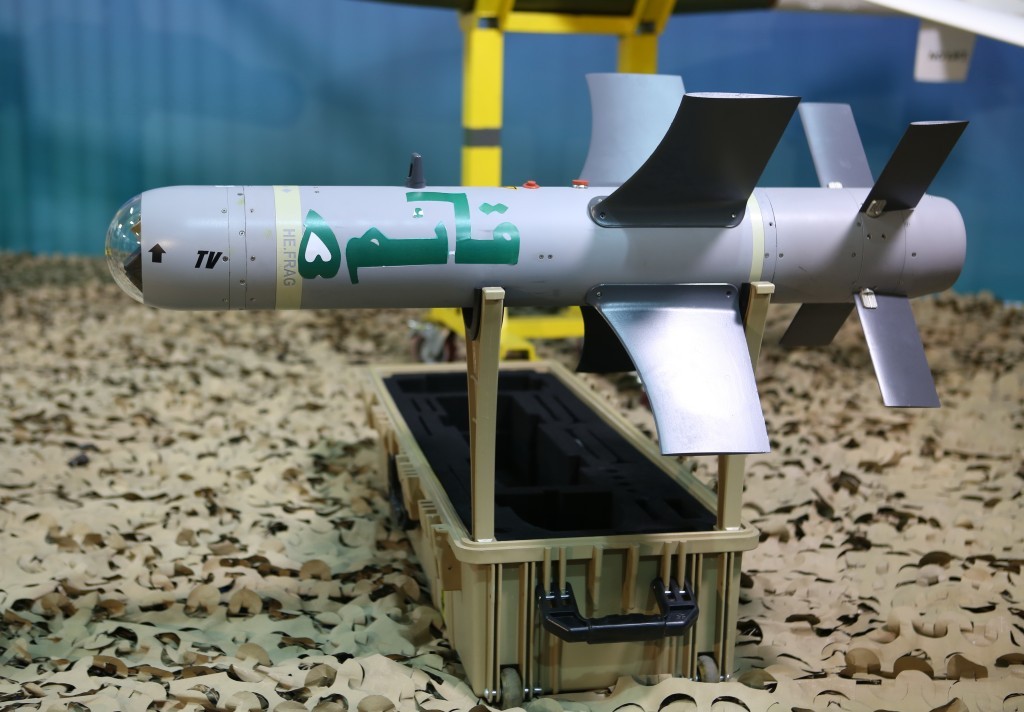
The Qaem-5 (ÞÇÆã-۵), which may also be seen referred to as the Ghaem-5, Qiam-5, and BS20, is a small Iranian, free-fall (unpowered) guided glide bomb. |
Use of munition captured in METIS - 10 SEPTEMBER 2024: "#Sudan 🇸🇩: Rapid Support Forces (#RSF) found an "object" dropped by an aircraft belonging to Sudanese Forces in #Khartoum.The object seems to be a part of #Iran-made 🇮🇷 'BS20' (also called 'Ghaem-5') air-to-ground missile launched from a Mohajer-6 UCAV." |
 |
EMIRATE MUNITION: 120 mm TB WITH SPECIAL FUZE |
|---|
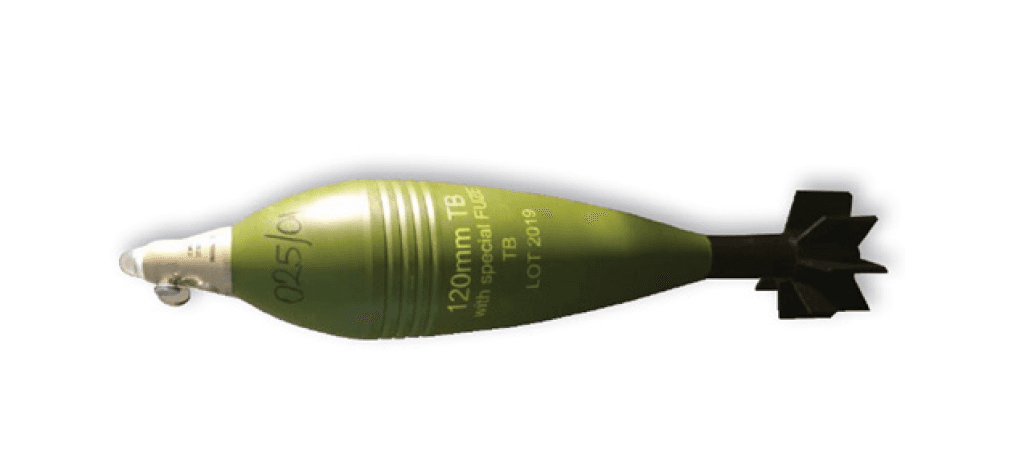
The '120 mm TB With Special Fuze', its official designation unknown, is a small, Serbian-developed, impact-fuzed, thermobaric high-explosive (HE) gravity (aerial) bomb, for use with uncrewed aerial vehicles (UAVs). A quadcopter-type UAV is fitted with two tubes to drop the modified mortar bombs. The exact designation is unknown but reported to be produced by Serbian company, Yugoimport, and is part of the production deal with the mortar bombs shown below. |
Use of munition captured in METIS - 13 JUNE 2023 "#Sudan 🇸🇩: Sudanese Armed Forces recently shot down a drone belonging to Rapid Support Forces (#RSF). The drone was armed with 120mm TB Thermobaric air drop shells with UT M18 fuzes. These shells were originally produced by #Serbia 🇷🇸 in 2020 and later sold to #UAE" |
 |
Fenix Insight has previously reported on this, providing subject matter expertise to The Guardian for their article regarding claims by the SAF of UAE provision to the RSF.
The involvement of Wagner forces and the Ukrainian special forces reportedly countering them is all too familiar, along with provision of weapons from Iran and Russia fuelling the conflict. Russia is locked into a costly war in Ukraine, which has absorbed far more resources than they likely ever expected, and has deployed its Wagner forces to gain access to gold mines to help fund their war efforts. Iran meanwhile, is reportedly looking to build a naval base, allowing direct access to the Red Sea. This shipping lane is one of the most valuable in the world, with the Iranian-backed, Houthi (Ansar Allah) movement in Yemen already causing significant disruption through their missile, UAV and uncrewed surface vessel (USV) attacks. The creation of an Iranian naval base in Sudan would increase their influence in the Red Sea, negatively affecting maritime operations in the region. The UAE involvement is also related to gold shipments, being the primary importer of Sudanese gold, and a major investor in a planned Red Sea port. It should be noted that there may be other foreign actors involved, and that each has been accused of supporting both sides, with it being likely that they are willing to switch their support to whomever will end up in control.
The combination of these foreign actors leads to the conclusion that the conflict in Sudan, while a civil war, should be looked at as part of the much wider geopolitical picture. One could draw a line from the Sahel region, through Sudan and the Middle East, to the northern tip of the Ukrainian front line, with many of the same actors involved. Moreover, with up to 150,000 dead, over 10 million displaced and 13 million at risk of famine, it is a conflict that only looks to get worse, with severe consequences for the civilian population.
Please do not hesitate to reach out to us if you would like to discuss the contents of this email, or if you have any questions regarding METIS.
Fenix Insight welcome your use of our data, visualisations, analysis, and other information, but always with proper attribution and a link back to our website. Please read our Attribution Policy for further information.

Source Information
Where our site contains links to other sites and resources provided by third parties, these links are provided for your information only. We have no control over the contents of those sites or resources, and accept no responsibility for them or for any loss or damage that may arise from your use of them. If you find a broken link or a link directing you to website material you feel is unsuitable, please contact us. If you have any queries about information accessed through links, you are advised to check directly with the organisation concerned.

From wildfires to droughts: How extreme weather is reshaping the risks posed by Explosive Remnants of War

Imagery analysis of suspected UAE-origin drones in Iran and Sudan

The Sahel under pressure: Jihadist groups expand and adapt
Escalation by accident: The strategic risks of stray munitions in NATO airspace